Founded in 2022 as a spin-off from ETH Zurich research, Gravis Robotics develops hardware and software solutions that transform existing construction machines into remotely operated, semi-autonomous, or fully autonomous equipment. Its technology has already been deployed across a wide range of use cases, including earthmoving, trenching, truck loading, and quarry operations.
Addressing Productivity and Workforce Challenges in Construction
Beyond the size of the funding round, the announcement reflects several long-term trends shaping the construction and infrastructure sectors.
As demand for energy networks, transportation infrastructure, housing, and data centers continues to grow, the industry faces a persistent shortage of skilled equipment operators. In this context, automation is increasingly viewed as a way to expand operational capacity while improving working conditions on construction sites.
According to Ryan Luke Johns, Co-Founder and CEO of Gravis Robotics, the goal is not to replace operators but to enhance their capabilities through more productive machines. The company estimates that its technology can improve earthmoving productivity by up to 30%.
This approach reflects a broader shift across the industry, where automation and artificial intelligence are increasingly being used to support field teams and optimize repetitive or low-value-added tasks.
Accelerating the Deployment of Autonomous Construction Equipment
This funding, provided by SoftBank, the Japanese technology investment group, will enable Gravis Robotics to accelerate its international expansion, strengthen its engineering teams, and continue deploying its platform across a growing number of machines and construction sites worldwide.
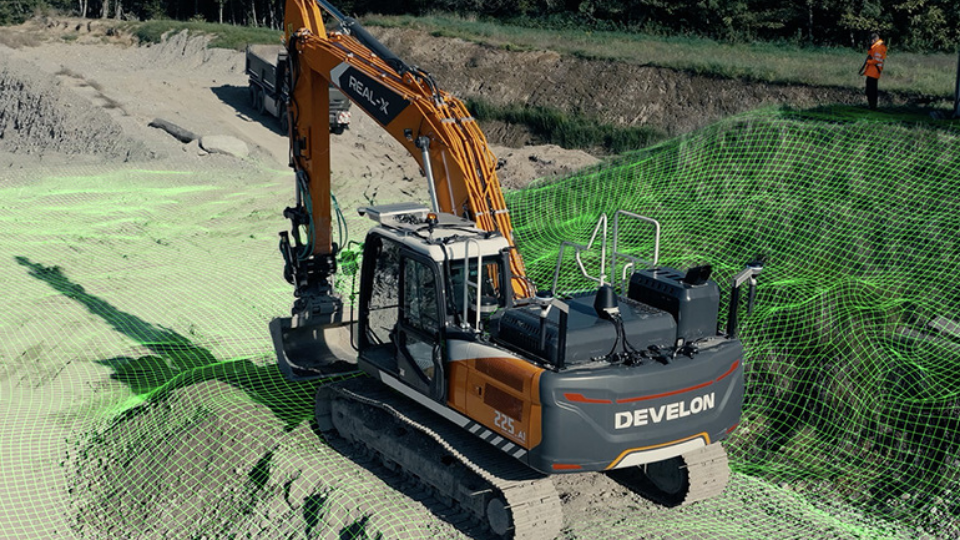
One of the key differentiators of the Gravis Robotics solution is its ability to upgrade machinery already in operation. Through its Gravis Rack system, the startup adds sensors, computing power, and automation software to existing equipment rather than developing an entirely new generation of specialized machines.
The company relies on artificial intelligence models trained on vast volumes of simulated data, enabling machines to understand their surroundings and interact with constantly evolving construction environments. This approach, sometimes described as “physical AI,” is designed to automate complex earthmoving and excavation tasks that require real-time adaptation to changing site conditions.
This technological approach could accelerate the adoption of autonomous equipment in the construction sector, where fleet renewal typically follows long investment cycles.
Gravis Robotics Already Collaborating on VINCI Projects
Collaboration between Gravis Robotics and companies within the VINCI Group is already underway. In 2026, Taylor Woodrow, VINCI Construction’s UK subsidiary, partnered with the startup to conduct what was presented as the United Kingdom’s first successful trial of an autonomous excavator.
Carried out at the Advanced Manufacturing Research Centre (AMRC) in Sheffield, the trial evaluated the machine’s capabilities across a range of earthmoving operations, including autonomous excavation, real-time terrain data capture using LiDAR technology, emergency stop procedures, and autonomous manoeuvring.
For Taylor Woodrow, this initiative forms part of a broader effort to improve safety, productivity, and quality on construction sites. The partners are now planning a new phase of testing on a project at Manchester Airport.
This collaboration highlights the growing interest across the construction industry in the automation technologies developed by Gravis Robotics and their potential application on real-world infrastructure projects.
CATALYST 2026: Gravis Robotics Accelerates Its Growth Trajectory
Gravis Robotics is among the startups selected for CATALYST, Leonard’s acceleration program dedicated to innovations transforming the construction and infrastructure industries.
Its selection reflects growing interest in technologies capable of simultaneously improving productivity, safety, and the attractiveness of jobs across construction and infrastructure sectors.
With this new funding round, the startup now has the resources needed to accelerate the deployment of its vision: construction equipment capable of autonomously performing repetitive tasks while leaving operators with a central role in supervising and managing operations.
Presented as the largest Series A ever raised in construction robotics, the transaction marks a new milestone in the industrialization of automation technologies for construction sites. As demand for energy, transportation, housing, and data infrastructure continues to rise worldwide, Gravis Robotics is betting that more autonomous equipment will help construction companies expand their execution capacity while addressing ongoing workforce shortages.
Discover More: EU-Startups Interview with Ryan Luke Johns, CEO of Gravis Robotics
A few months before this funding round, Ryan Luke Johns, Co-Founder and CEO of Gravis Robotics, took part in an interview conducted by EU-Startups in partnership with Leonard during Launch Day 2026.
During the interview, he discusses the company’s vision for autonomous construction equipment, the productivity gains already achieved in the field, and how these technologies can help address the shortage of skilled operators across the construction industry.
Watch the Gravis Robotics Interview